
Use AI to support the learning task
A useful student workflow helps you discover sources, understand an argument or improve your own draft. It should not replace the evidence or conceal who produced submitted work. Follow the rules of the specific course; this article does not claim one universal institutional policy.
| Task | Candidate | What you retain |
|---|---|---|
| Paper discovery | Elicit Basic | Original papers and your inclusion criteria |
| Writing feedback | Grammarly Free | Your argument, facts and final wording |
| Reference organization | Zotero | Verified metadata and source library |
Elicit's pricing lists a Basic free plan with limits on some workflows. Grammarly's plans distinguish Free from a paid trial. Zotero is not an AI generator; it is included because source management is part of a responsible research workflow.
Example: prepare a literature note
Write the question first. Search for papers, then open the originals. For each source, record its question, method, result and limitation in your own words. Use an assistant to suggest questions you may have missed, and check each suggestion against the text.
Do not cite a generated summary as if you read the underlying paper. If only the abstract is available, label that boundary. Keep quotations and paraphrases distinct, and preserve a link or reference identifier for each source.
Use AI to make your reasoning visible
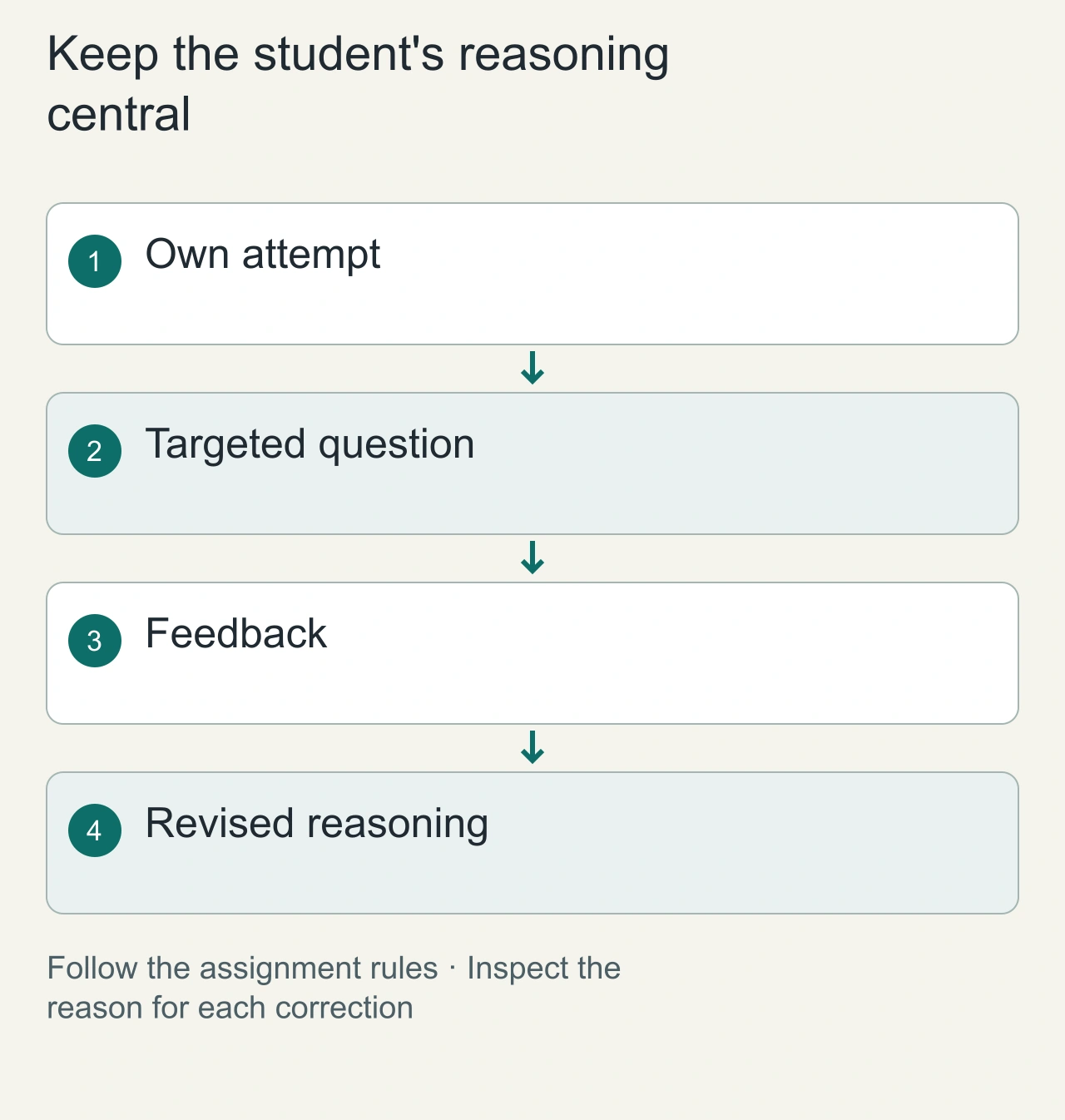
Choose a learning task before choosing a tool. For a short essay, ask the assistant to identify the claim in each paragraph and where evidence is missing. For a mathematics problem, attempt the solution first and ask which step needs justification. These requests preserve work you can inspect and improve, rather than replacing the exercise with a finished answer.
Keep the assignment instructions beside the conversation. An instructor may permit feedback while restricting generated submissions. Check those rules before using the output. A tool's technical capability does not determine what is appropriate for a particular course. Save a short note describing how assistance was used when the course requires disclosure.
Use a fixture paragraph with one unsupported statement and one well-supported statement. Ask for critique, then check whether the assistant distinguishes them. If it rewrites both into smoother prose without examining evidence, it is providing editing rather than research feedback. That can still be useful, but it is a different task.
For feedback on an essay, supply the thesis and one paragraph rather than the entire assignment at first. Ask which sentence supports the thesis and which sentence needs evidence. Write your own revision, then compare whether it resolves the identified problem. This preserves a visible learning sequence. For practice problems, keep your incorrect step and the explanation of its error in a study note. A later attempt should demonstrate the correction without needing the same hint. The useful outcome is reasoning you can reproduce, rather than a collection of polished answers.
Build a source trail for research
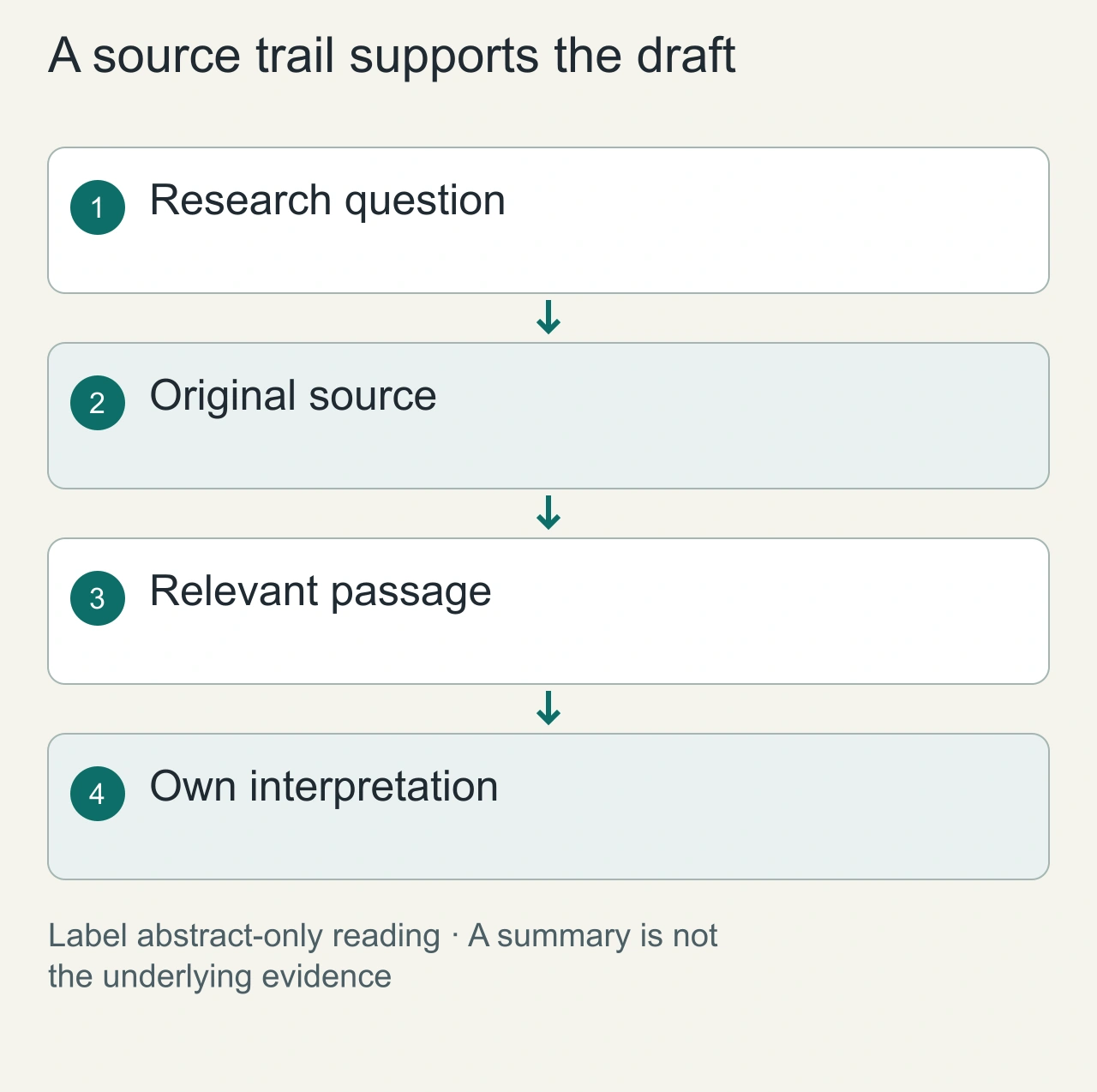
For a literature assignment, create a table of question, source, relevant passage and your interpretation. Ask the assistant to suggest search terms or explain an unfamiliar passage, then open the source yourself. Keep quotations separate from paraphrases. A generated citation or summary should not become evidence that you read the original work.
When only an abstract is available, label the boundary and avoid claiming a full methods review. If a cited paper does not support the exact sentence, revise the sentence or find a more appropriate source. These checks are small enough to perform on a short assignment and build a habit that scales to larger projects.
Use the institution's library and course references as starting points where available. Research assistants can complement that route, but current access limits matter. Check vendor documentation such as [Elicit's plans](https://elicit.com/pricing) for the workflow you intend to use. This article does not guarantee an allowance or report a measured improvement in student outcomes.
Example: request feedback on your draft
Ask which paragraph has an unclear claim or missing transition. Compare the suggestion with your intended meaning. Verify names, dates and numbers after any rewrite. A more polished sentence can still be factually wrong or flatten an important qualification.
For practice questions, ask for an explanation, attempt the problem yourself, then request feedback on your reasoning. Revealing the solution before making an attempt can reduce the value of the exercise.
Free access still has boundaries
Check signup requirements and quotas before relying on a tool for a deadline. Free is not the same as no account or no data processing. Use synthetic or public material when first evaluating a service, and do not upload private classmates' information without appropriate permission.
This is a task-based documentation guide, not an independent student-outcome experiment. Explore AiFolder's AI directory, research workflows and developer utilities for related tasks.
Choose a free workflow that survives a deadline
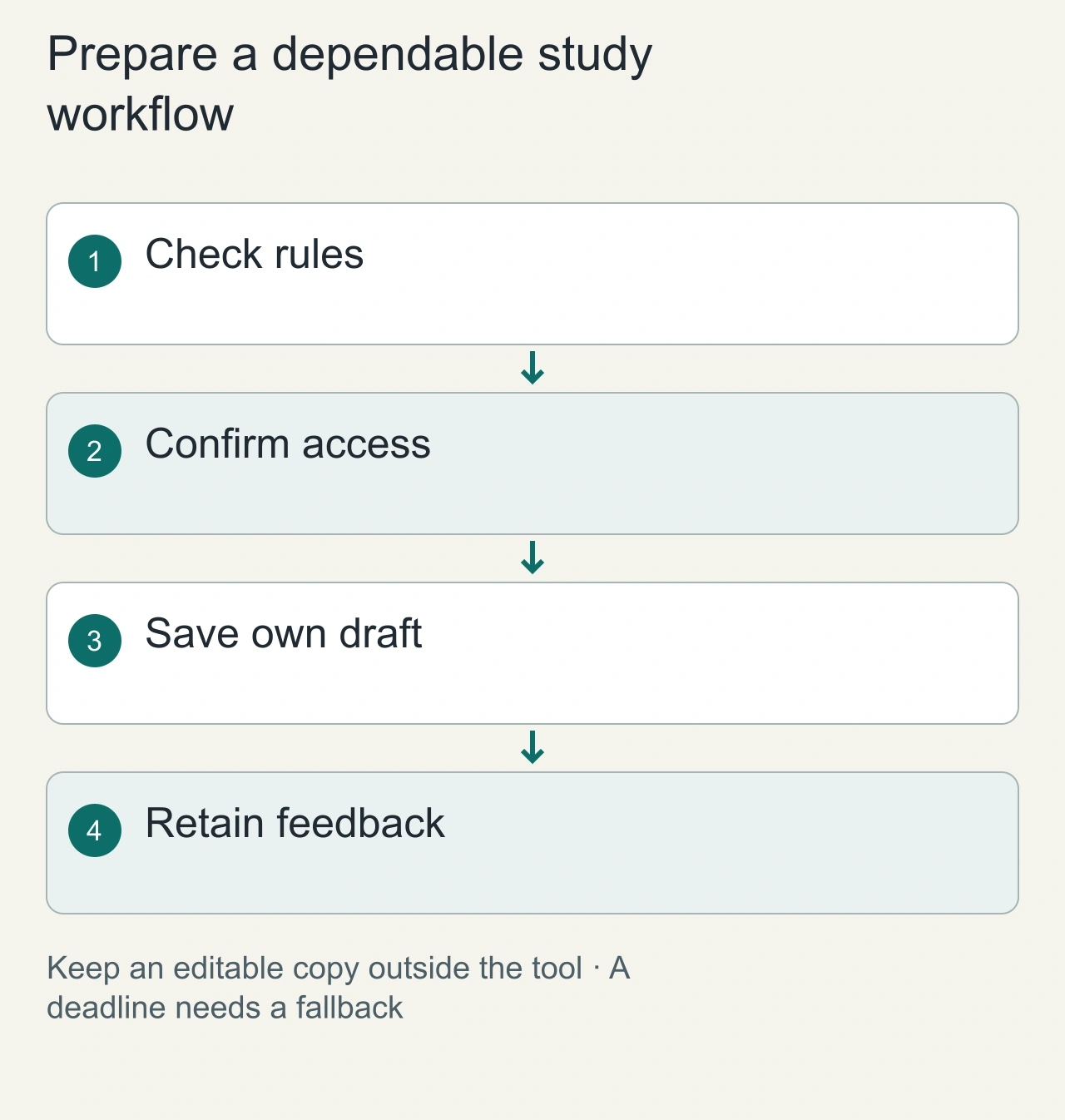
Write down signup requirements, trial status, task limits and export needs before relying on a service. If the assignment requires a shareable document, confirm that the result can be kept in a format you can edit. A free conversation that cannot preserve your work may be awkward when the account reaches a limit.
Use public or synthetic material for the first evaluation. Keep classmates' private information and unpublished research out of casual testing. If a task needs sensitive material, check the institution's rules and the vendor's data explanation first. Running in a browser does not establish that processing stays on the device.
Save your own draft locally and retain the feedback separately. If the tool becomes unavailable, you should still have the assignment and your source trail. Evaluate usefulness through the corrections you understand and can explain. A polished paragraph is valuable when you can defend its meaning and evidence, rather than simply accept its fluent wording.