
NVIDIA is adding a 64GB unified-memory configuration to DGX Spark on October 23, 2026, starting at $4,999 through Acer, ASUS, Dell, Gigabyte, HP and MSI. The useful question is whether a $4,999 local AI box makes sense when developers can already run smaller models on Macs, RTX workstations or rented GPUs.
What the 64GB DGX Spark includes
NVIDIA says the new configuration keeps the GB10 Grace Blackwell Superchip, DGX OS, ConnectX-7 networking and its CUDA-accelerated AI stack. It targets local inference, AI agents, fine-tuning, data science and private workloads. NVIDIA says one 64GB system supports models up to 100 billion parameters. Treat that as a vendor capability claim, not a guarantee that every 100B model will run with useful context length and speed.
Work backwards from a workload that must stay local
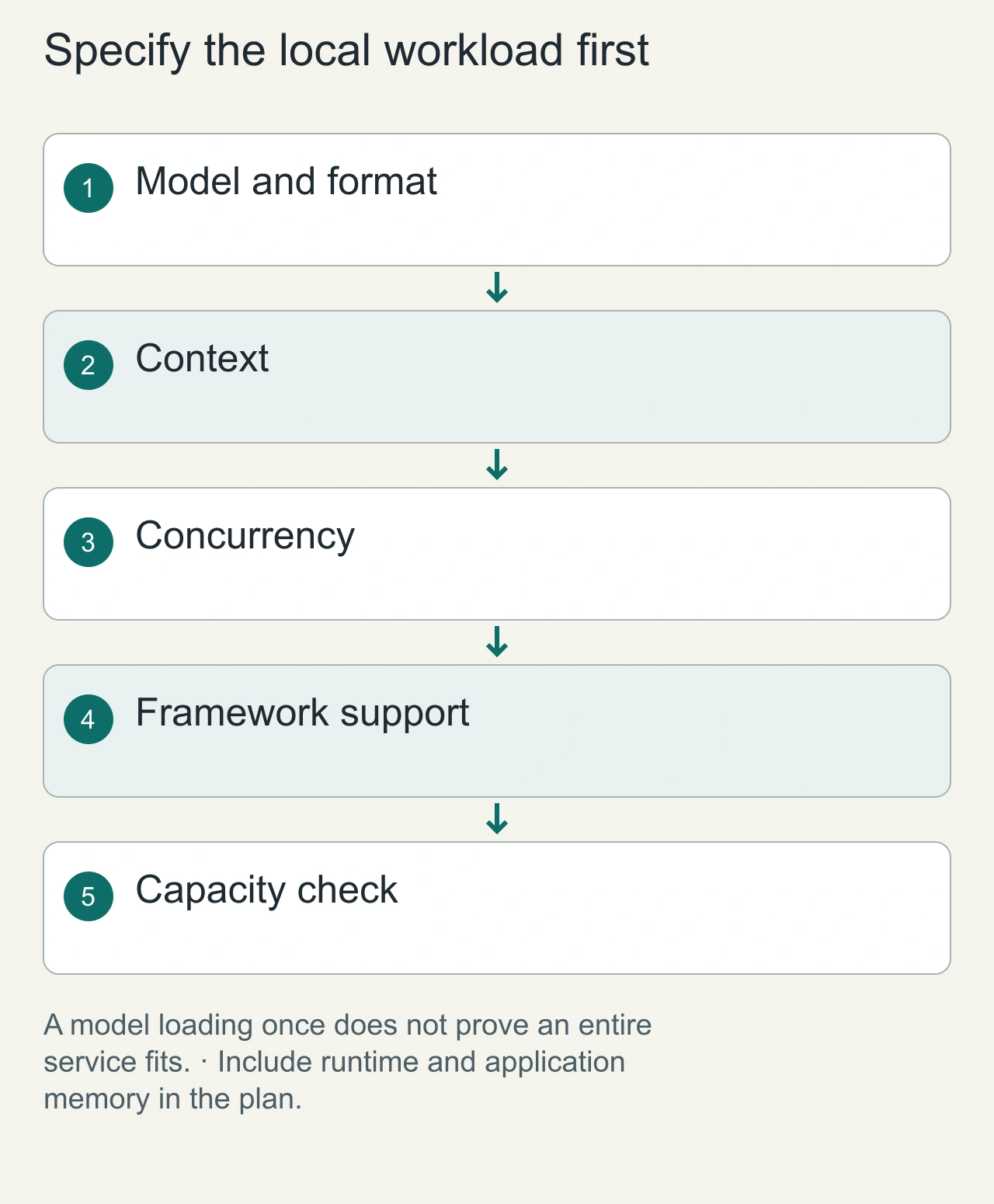
The useful buying question is which job a compact local AI system lets you finish. A developer experimenting with inference, a researcher adapting a model, and an organization keeping private documents on site have different constraints. Write down the required model, input size, concurrent users, framework, and acceptable response time. Then ask whether that complete workload fits the machine. A headline parameter count or memory capacity is only part of that decision and does not replace a supported-software check.
NVIDIA's current announcement describes a 64GB unified-memory configuration and its software ecosystem. Treat that as the vendor specification, not an AiFolder performance result. For an illustrative local document assistant, the machine must hold model weights, runtime allocations, context state, and the surrounding retrieval service at the same time. A workload that barely starts with one short request may become unreliable when a second user arrives or a longer document is loaded. Keep headroom in the design and test the concurrency pattern you actually intend to use.
The privacy case for local AI
Local execution can keep source code, private documents and agent state on developer-controlled hardware rather than sending them to a hosted inference API. But local does not automatically mean private: applications may still call cloud APIs, send telemetry or use web tools. Related AiFolder reading: AI Agent Permissions Explained.
Two Sparks can become a cluster
NVIDIA says two 64GB units can connect through ConnectX-7, pool memory to 128GB and support models up to 200B parameters. Sync Cluster Assistant handles configuration. NVIDIA reports up to 1.7x performance for two clustered 64GB systems versus one in its Qwen 3.8 27B test. This is a vendor result, not an AiFolder benchmark.
Compare ownership cost with an actual usage pattern
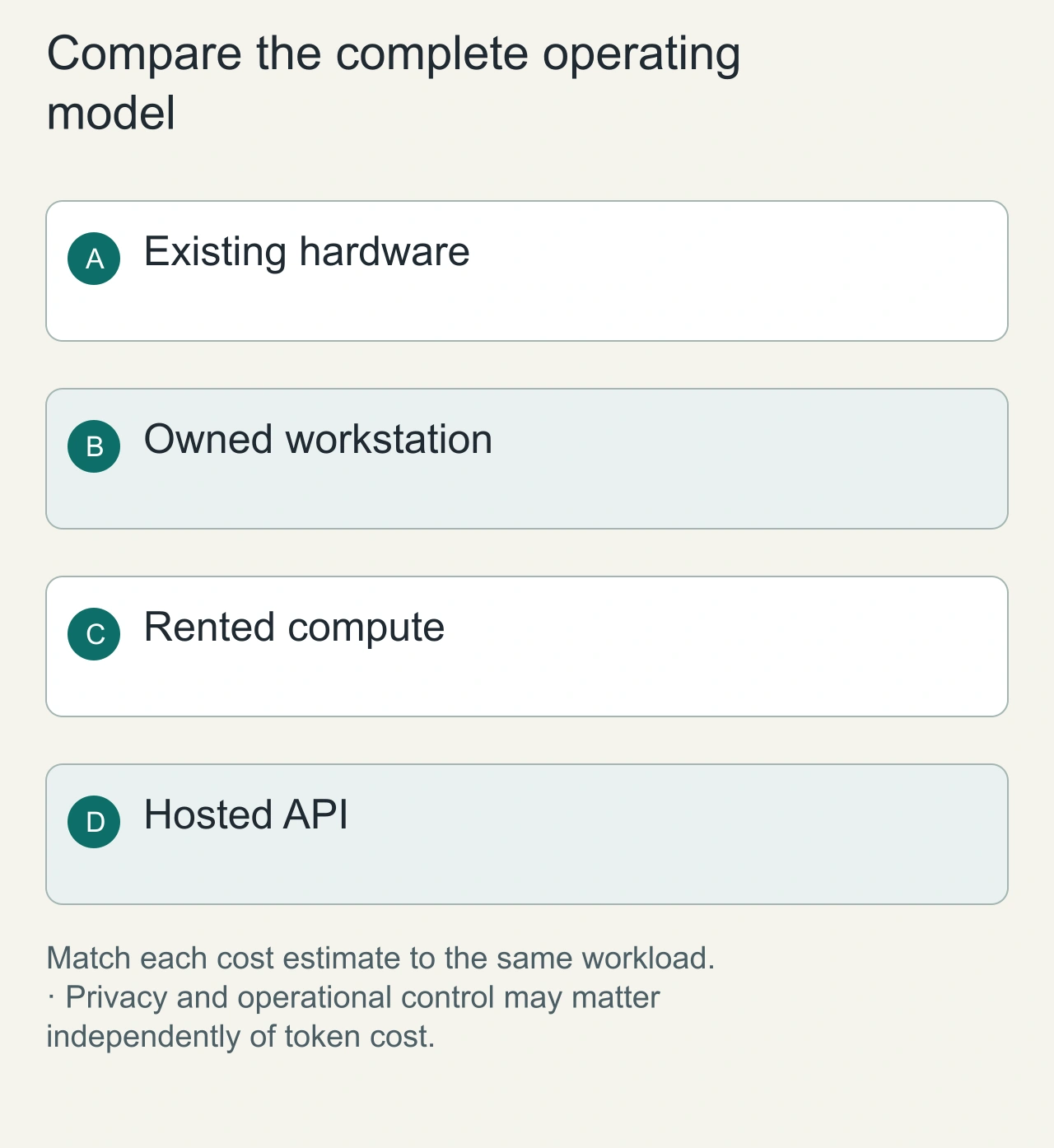
A purchase should be compared with the alternative you would really use: an existing computer, rented compute, or a hosted API. In a simple spreadsheet, include hardware, electricity, storage, maintenance time, and the expected duration of use. For rental, include idle time and data movement. For an API, estimate input and output volumes and any operational restrictions that matter. Use your own current quotes rather than carrying a launch price into a long-term cost model.
Suppose a team needs an occasional large experiment but runs a small assistant every day. One machine need not solve both workloads. The daily job may fit existing hardware while the rare experiment runs remotely. Conversely, strict data locality or repeated sustained work may justify a local system even when its narrow token cost looks higher. These are decision scenarios, not measured savings. Publish the assumptions with any cost estimate so that a reader can change utilization, energy price, and maintenance effort instead of inheriting an unexplained recommendation.
Is 64GB enough?
Memory must hold more than model weights. Context, KV cache, runtime overhead and concurrent requests also consume memory. Long-context agents may hit practical limits before a headline parameter count suggests they should.
DGX Spark vs workstation vs cloud
A useful comparison includes usable model sizes, tokens per second, time to first token, long-context behavior, power, setup effort, concurrent agent capacity and total cost. Cloud GPUs avoid a large upfront purchase. Local hardware offers predictable availability and can keep inference data on-device.
AiFolder testing plan
When suitable hardware is available, AiFolder should test the same coding-agent, document-RAG, long-context and concurrent-agent workloads across DGX Spark, a conventional local machine and a cloud GPU. Record tokens per second, TTFT, peak memory, power, setup time and cost. Hands-on test status: pending. We do not claim independent DGX Spark performance numbers.
Practical takeaway
At $4,999, DGX Spark 64GB is a purpose-built middle ground between ordinary desktops and cloud AI infrastructure. The decisive question is real workload performance per dollar, which still needs independent testing.
Source
NVIDIA Blog, DGX Spark 64GB announcement, October 2, 2026.
Make a pre-purchase compatibility record
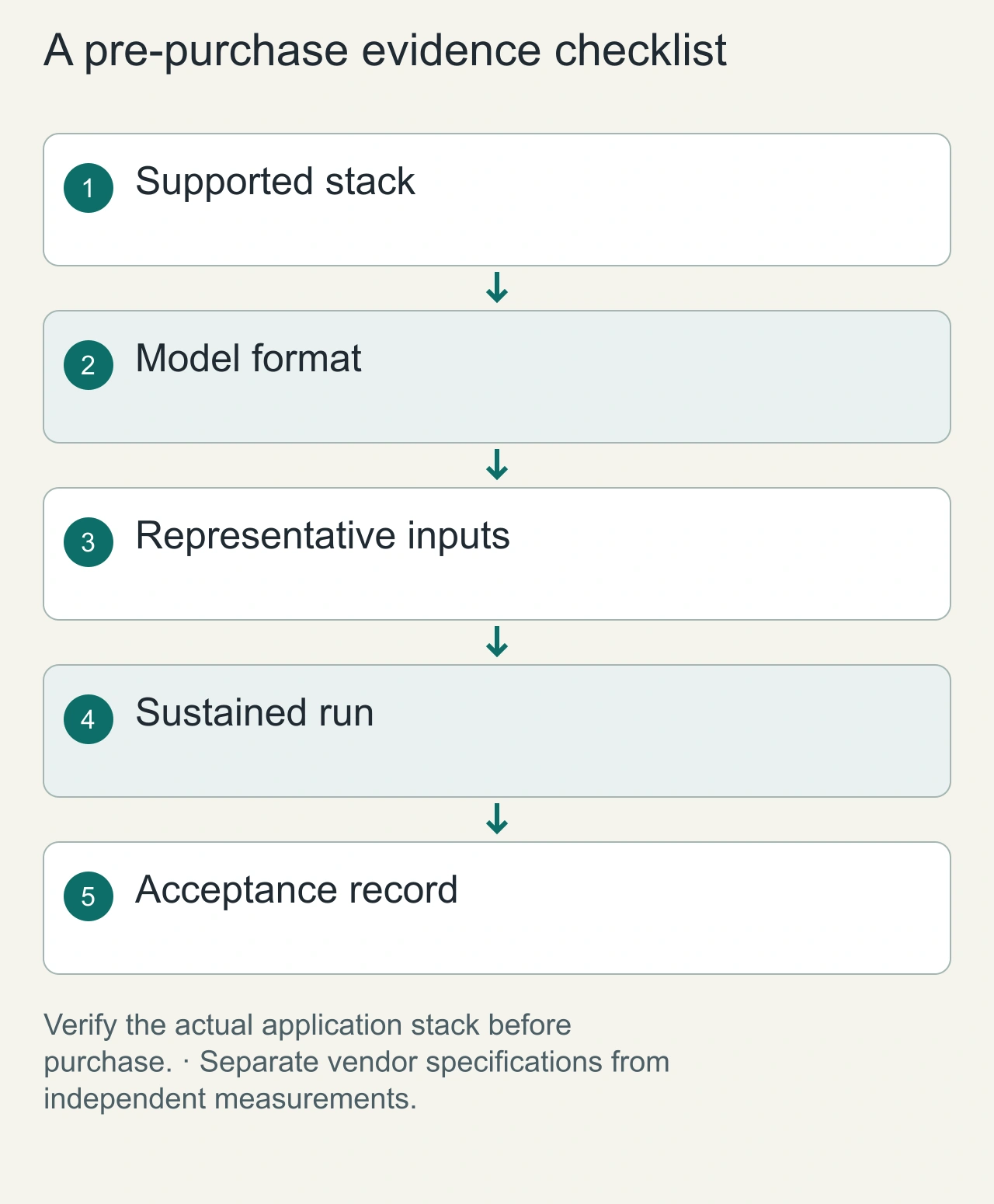
Before ordering, verify the supported operating system, architecture, framework versions, model format, and inference path. NVIDIA provides a porting guide and model-oriented material; consult the relevant workload guidance rather than assuming that every desktop package supports the platform. Record the exact dependency stack needed for your application. If a proprietary extension or a required package is missing, the issue can matter more than the advertised compute figure.
A useful acceptance run loads the intended model, executes representative short and long inputs, exercises concurrent requests, and watches memory pressure over a sustained session. Record the device, software versions, quantization, context setting, and workload so the results can be reproduced. AiFolder has not completed that run on a 64GB DGX Spark, and this guide therefore makes no claim about its tokens per second, fan noise, or sustained temperature. The editorial cover is a conceptual workstation illustration, not evidence that we own or photographed the device. Ask the seller to confirm the exact configuration and support terms on the order, because an article about a product family does not establish the contents of a particular offer.